
News
News
Could the body of an electric vehicle, drone, or robot store energy instead of carrying a separate battery as added weight?
A research team led by Academician Zhongqin Lin at the Institute of Manufacturing for Thin-walled Structures, School of Mechanical Engineering, Shanghai Jiao Tong University (SJTU), has developed a new structural energy-storage composite that moves this concept closer to reality.
The team introduced a structural lithium-ion capacitor (SLIC) that integrates mechanical load bearing and electrochemical energy storage within the same carbon-fiber composite. The study, entitled “Intercalation-Modulated Carbon Fibers Unify Gigapascal Strength with Superior Electrochemical Performance in Structural Lithium-Ion Capacitors” was published in Energy Storage Materials. Ph.D. student Shengda Jiang is the first author. Associate Professor Ji He is the corresponding author. Academician Zhongqin Lin, and Professor Yongbing Li are co-authors.
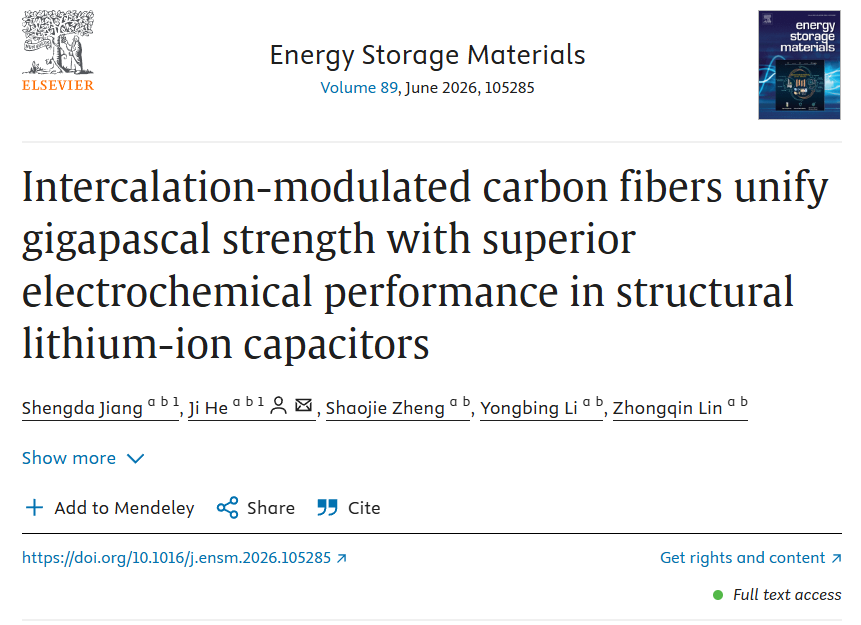
Figure 1. The study was published in Energy Storage Materials (Volume 89, June 2026, Article 105285)
Breaking the trade-off between structural strength and energy storage
Structural energy-storage composites seek to remove the boundary between energy-storage devices and load-bearing structures, allowing a single material system to carry mechanical loads while storing and releasing electrical energy. However, existing technologies face inherent trade-offs. Structural supercapacitors deliver rapid power output but typically offer limited energy density, whereas structural batteries store more energy but generally face lower power density, irreversible capacity loss in carbon fibers, rising interfacial resistance, and strength penalties caused by heavy active-material coatings.
To address these trade-offs, the SJTU team turned to the carbon fibers that form the structural backbone. Although carbon fibers account for a major fraction of the composite mass, their intrinsic lithium-storage capability remains largely underutilized in existing structural energy-storage systems. Building on this insight, the team developed a SLIC that uses carbon fibers as both load-bearing reinforcements and active energy-storage electrodes.
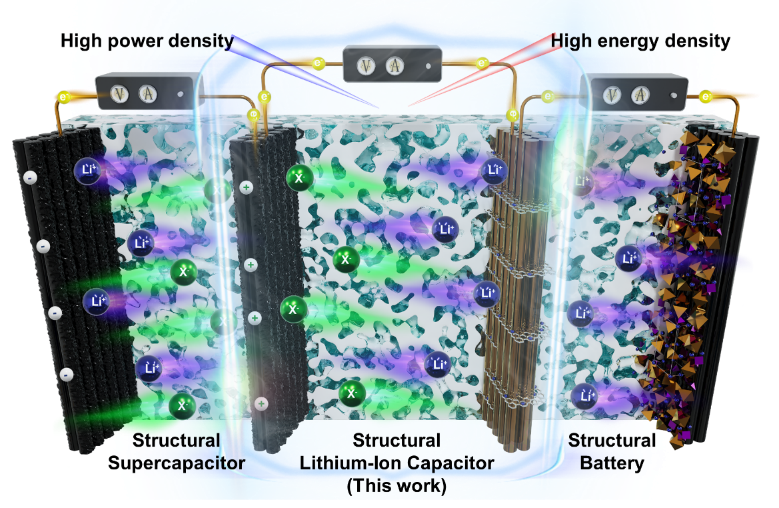
Figure 2. Conceptual comparison of a structural supercapacitor, the proposed SLIC, and a structural battery
Developing Structural Lithium-Ion Capacitors through Integrated Material-Structure-Function Manufacturing
The team developed an integrated material-structure-function manufacturing route comprising controlled lithiation of carbon fibers, layered assembly, structural-electrolyte infiltration, and hot-press curing. Electrochemical intercalation converts carbon fibers into low-potential, reversible lithium-storage anodes. The lithiated carbon-fiber anode, separator, and carbon-fiber-based cathode are then stacked, infiltrated with a structural-electrolyte precursor, and cured into a thin-walled load-bearing component.
The resulting SLIC couples battery-type Li+ intercalation at the anode with fast capacitive ion adsorption at the cathode, forming a hybrid energy-storage mechanism. The controlled intercalation modulation of the carbon-fiber anode compensates for its first-cycle irreversible capacity loss, while the capacitive carbon-fiber cathode eliminates the need for thick intercalation-type active-material coatings. Together, these features preserve structural efficiency while delivering both high energy and high power.
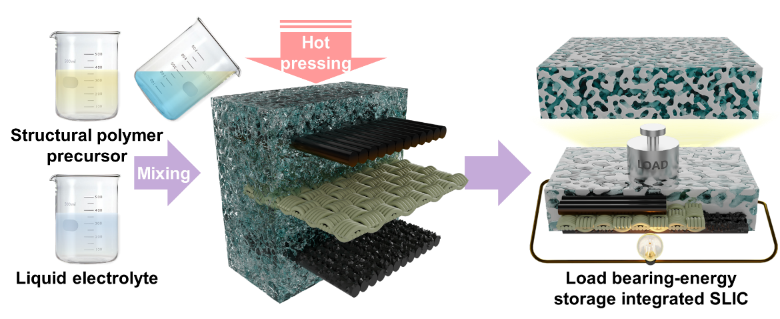
Figure 3. Integrated material-structure-function manufacturing route for the SLIC
Uncovering How Carbon Fibers Combine Reversible Lithium Storage with Efficient Load Bearing
Electrochemical testing, time-of-flight secondary ion mass spectrometry, molecular dynamics simulation, and in situ X-ray micro-computed tomography with digital volume correlation revealed how lithium is distributed, transported, and mechanically accommodated within the carbon fibers. Weakly bound lithium supports reversible deintercalation with limited disturbance to the carbon framework, while residual lithium helps maintain a lithium-rich interfacial environment. Controlled intercalation lowered interfacial resistance by a factor of 4.3. In situ mechanical analysis further confirmed that the lithiated carbon-fiber layers carried the main load with a comparatively uniform strain field.
After replacing a plain-weave glass-fiber separator with an ultrathin cellulose membrane to improve interlaminar bonding and stress transfer, the optimized SLIC achieved a tensile modulus of 72.2 GPa, a tensile strength of 1084 MPa, an energy density of 44.5 Wh/kg, a power density of 789 W/kg, and an operating voltage of 3.95 V, together with nearly complete utilization of the cathode capacity. Its calculated multifunctional efficiency exceeded 150%, indicating substantial potential for system-level mass savings.
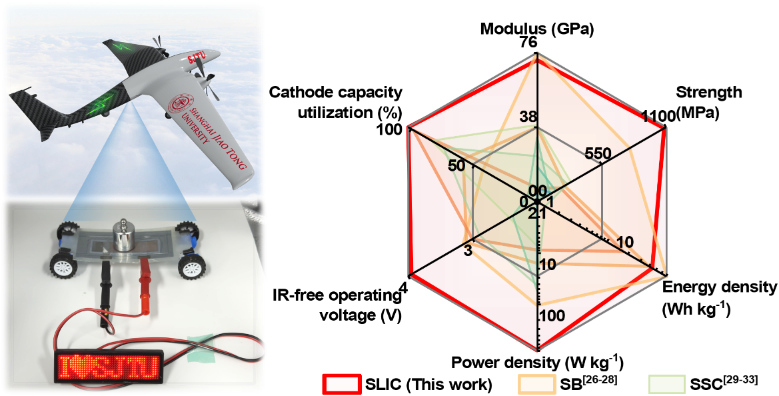
Figure 4. Demonstration and multidimensional comparison of the SLIC's mechanical and electrochemical performance
Realizing Next-Generation Thin-Walled Structures with Intrinsic Energy Storage
To demonstrate its practical potential, the team fabricated a 0.4-mm-thick SLIC panel and subjected it to a bending load more than 25 times its own weight. While carrying the load, the panel continuously powered an LED, an electronic-ink display, and a miniature fan, confirming that the material can deliver energy during mechanical service.
The structural lithium-ion capacitor establishes a new architecture and manufacturing pathway for embodied-energy thin-walled components. The concept could support future lightweight electric vehicles, unmanned aerial systems, intelligent robots, and aerospace equipment, enabling structural panels to evolve from passive load-bearing parts into multifunctional components that also store and supply energy.
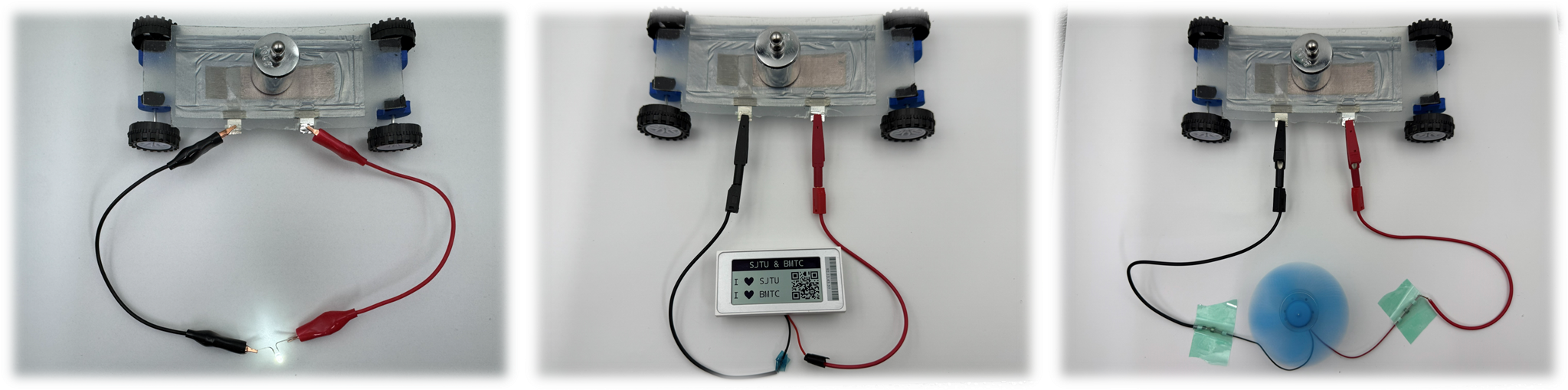
Figure 5. Demonstrating simultaneous load bearing and power delivery for next-generation mobility
This work was supported by the National Natural Science Foundation of China, the Advanced Materials-National Science and Technology Major Project, the State Key Laboratory of Mechanical System and Vibration, and UAES-funded PhD Projects SJTU. The team also gratefully acknowledges Jinyu Wang and Deputy Chief Engineer Fang Zhang at the National Engineering Research Center for Nanotechnology; Xiaomin Li and Yanhua Zhu at the Instrumental Analysis Center of Shanghai Jiao Tong University; and Wei Chen and the laboratory engineers at the Institute of Manufacturing for Thin-walled Structures at Shanghai Jiao Tong University for their invaluable assistance with experimental testing and characterization.
Paper link: https://doi.org/10.1016/j.ensm.2026.105285

Shanghai Jiao Tong University
Address: 800 Dongchuan Road, Shanghai
200240